
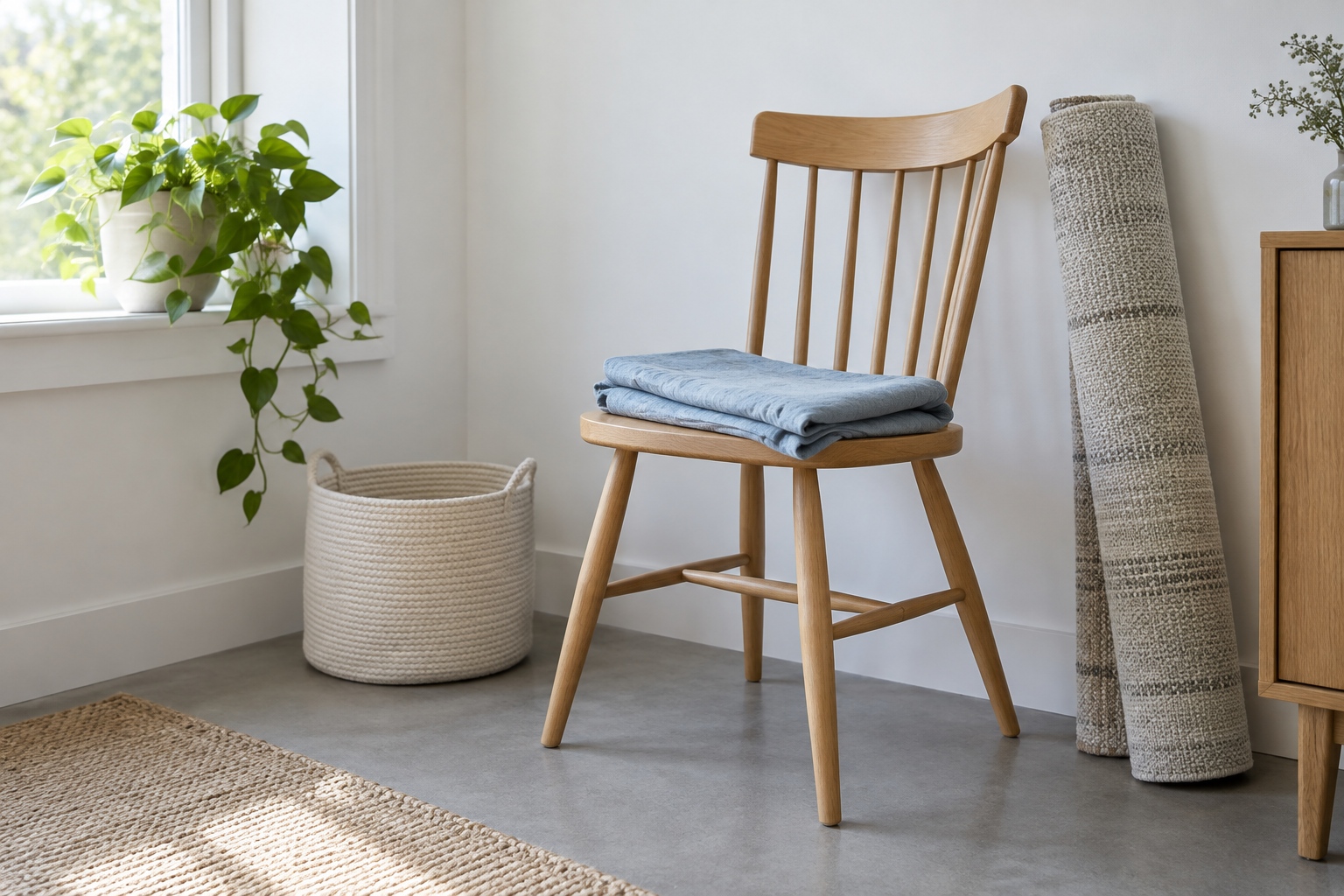
A rug needs to work with moving furniture and opening doors, not only look balanced in a photograph. Mark its proposed dimensions on the floor before ordering and test the room as you normally use it.
Begin with the furniture arrangement you intend to keep. In a dining area, pull the chairs out to realistic sitting positions. In another room, check where feet, furniture legs and walking routes meet the proposed edges. There is no need to copy a styled room exactly; the useful size depends on your own layout.
Check nearby doors across their full opening path. Read the rug's stated thickness and consider any recommended underlay in the total height. A door that clears the bare floor may catch a thicker surface. If the information is missing, obtain it before deciding that the rug fits simply because its width and length are suitable.
Read the backing and floor-suitability guidance. Different rugs and underlays have different instructions, and the appropriate combination depends on the product and floor. Do not assume a separate underlay is included or that any backing will behave the same way on every surface. Include a recommended accessory in the total when it is part of the intended setup.
Cleaning requirements can influence size as well as material choice. Check the care label and distinguish routine care from a complete cleaning process. A rug described as washable still needs a washing arrangement that accommodates its actual dimensions and instructions. Avoid choosing a large version on the assumption that the method for a small mat will be equally practical.
Color and pile are worth assessing for appearance and feel, but do not let those preferences replace the fit check. Product photographs may use different lighting, and a sample can show only part of a larger pattern. Look at the full design and consider where important elements will sit beneath furniture.
Imagine a hypothetical rug that fits neatly under a dining table but ends before the chairs' pulled-out positions. Every use moves chair legs across the edge. Marking the occupied arrangement reveals whether another size or layout would serve better before the rug arrives.
When delivered, check the model, size and care information. Follow the instructions for laying it and any underlay, and review the edge positions after the furniture is in place. Keep movement routes unobstructed and avoid improvised fixes that conflict with the product or floor guidance.
Record the dimensions and practical observations that made the arrangement work. If you later change furniture, reassess the rug in that new layout rather than assuming the previous fit still applies. A successful choice supports the room in motion as well as the room at rest.